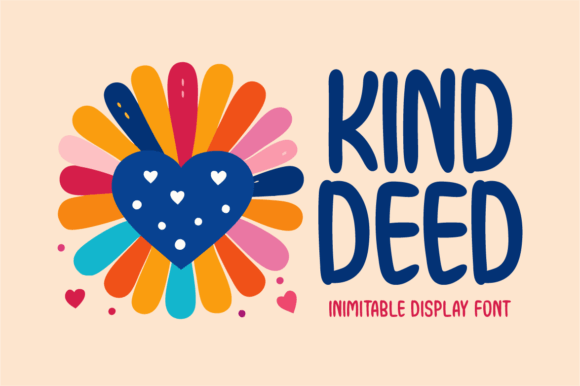
Kind Deed: A Display Font That Elevates Handmade Branding
I was designing a set of candle labels for a new lavender soy collection when I first tried Kind Deed. I wanted something that felt warm and personal but still refined. The moment I typed out “Lavender Fields” in Kind Deed, the label transformed. It wasn’t just text anymore—it was part of the story I wanted to tell with my product.
Kind Deed is a display font that carries a unique charm. Its soft curves and balanced letterforms give it a timeless appeal, making it perfect for projects that need a touch of elegance without feeling too formal. Whether you’re printing boutique tags or designing digital downloads, this font adds a sense of craftsmanship and intention.
One of the best things about Kind Deed is its versatility. I’ve used it for greeting cards, wedding invitations, and even seasonal tags for holiday gift sets. It works beautifully for short phrases, brand names, and decorative titles. Because it’s a display font, it shines brightest when used at larger sizes—think headers, product names, and feature text rather than long paragraphs.
Real-World Uses for Kind Deed in Handmade Projects
Let’s say you’re creating a line of natural soy candles. You’ll likely want labels that feel personal and artisanal. Kind Deed helps set that tone. I printed out a few label mockups using this font for different scent names—“Cozy Hearth,” “Citrus Grove,” and “Forest Rain.” Each one felt like a small story, and the font’s character gave each label a distinct but cohesive identity.
- Wedding welcome boards
- Printable wall art
- Boutique packaging
- Seasonal holiday tags
- Sticker designs for planners
For digital product creators, Kind Deed also performs well on screen. I used it in a set of downloadable planner pages and noticed how it added a soft, inviting energy to the layout. It’s clean enough for modern aesthetics but carries a handmade warmth that works well for stationery and journaling templates.
How Kind Deed Enhances Product Presentation
Typography plays a quiet but powerful role in how your products are perceived. When I switched from a generic script font to Kind Deed on my greeting card line, the change was subtle but meaningful. Customers began commenting on how “thoughtfully designed” the cards looked, which made me realize how much weight the right font carries.
Using a premium display font like Kind Deed can elevate your brand’s visual identity. It adds a sense of quality and intention, which helps your handmade goods stand out in a crowded market. Whether it’s on a mug, a tote bag, or a wedding invitation, Kind Deed brings a polished, personal feel that’s hard to replicate with standard fonts.
Design Tips for Using Kind Deed
When working with Kind Deed, it’s helpful to pair it with simpler fonts to maintain balance. I often pair it with a clean sans serif like Montserrat or Open Sans for body text. This contrast helps the display font shine without overwhelming the design.
- Use Kind Deed for titles, names, and short phrases
- Pair with a clean sans serif or simple serif font
- Check for alternates and ligatures for custom looks
- Test readability at small sizes for stickers and tags
- Ensure font licensing covers your intended product use
Before using Kind Deed in physical products or digital downloads, always check the licensing. Most quality display fonts come with commercial use permissions, but it’s good to confirm. Also, look for multiple file formats (like OTF and TTF) and check if the font includes swashes, ligatures, or alternate characters to add visual interest.
Final Thoughts on Kind Deed
As a maker, I’ve found that the right font can be just as important as the product itself. Kind Deed has become a go-to in my design toolkit because it blends elegance with approachability. Whether I’m printing labels for handmade soap or designing a digital invitation, it brings a sense of warmth and craftsmanship that feels authentic.
If you’re looking for a display font that enhances your creative projects without overpowering them, Kind Deed is worth trying. It’s not just a font—it’s a design element that helps your handmade story come to life.